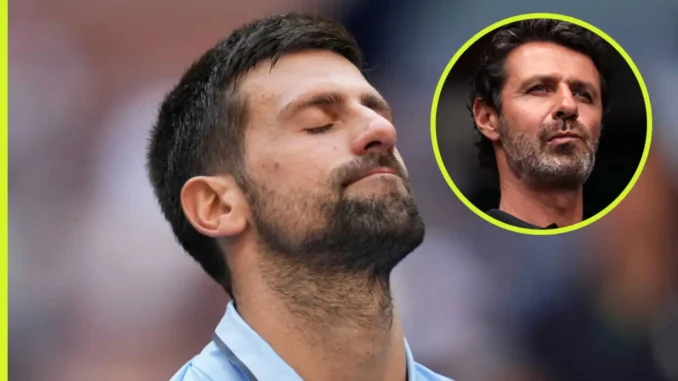
Novak Djokovic’s candid interview with Piers Morgan produced a series of striking revelations, and one of the most discussed involved the enormous sponsorship money the Serbian star has voluntarily declined throughout his career. Djokovic explained that his long-held commitment to personal principles, along with his insistence on working only with companies that match his beliefs, has often come at a significant financial cost. As he told Morgan, he once rejected a massive, multi-million-dollar proposal from a major soft-drink manufacturer because the brand did not align with his values.
Although Djokovic has earned substantial sums through partnerships with Lacoste, ASICS, and the Aman luxury hotel group, he acknowledged that the total could have been far higher had he been willing to accept every lucrative offer that crossed his desk. “I refused a lot of the big brands and big paychecks in my career because I cannot represent something that I don’t believe in,” he said pointedly during the interview.
Renowned coach Patrick Mouratoglou has now weighed in on Djokovic’s remarks, stating that the tennis champion’s unwavering principles reflect a deeper authenticity that many observers overlook. Posting on LinkedIn, Mouratoglou noted that while most athletes dream of enormous endorsement contracts, Djokovic has deliberately rejected some of the industry’s most profitable opportunities, and the motivation behind those decisions reveals his true character. According to Mouratoglou, this sincerity is one of the main reasons he has admired Djokovic for so long.
He elaborated that for years critics accused Djokovic of being “inauthentic,” yet, ironically, the Serbian is perhaps the most genuine figure in modern tennis. Mouratoglou emphasized that Djokovic acts from real conviction and refuses to let money steer him toward anything that conflicts with his beliefs. The coach added that many people would be shocked to know just how many offers Djokovic has dismissed—ranging from products he didn’t trust to companies whose ethics didn’t match his own, and even contracts linked to video gaming because he did not think such content was beneficial for young people.

Whether one agrees with Djokovic’s views is irrelevant, Mouratoglou argued; what truly matters is that he acts consistently with them. He anticipated the common counterargument that it is “easy” for a wealthy athlete to turn down money, but he pushed back, noting that most athletes who reach Djokovic’s income level do not reject large contracts on moral grounds. Furthermore, he clarified that wealth rarely erases the human desire for more. In a profession where players often spend years earning little before enjoying a relatively short window of high earnings, the temptation to maximize every financial opportunity can be intense.
Mouratoglou stressed that Djokovic operates differently. To him, money is not a core value. While he prioritizes security and stability for himself and his family, he refuses to achieve them at the expense of his integrity. This, the coach asserted, is a trait worthy of respect regardless of personal opinions about Djokovic.
Many of Djokovic’s global supporters undoubtedly agree with Mouratoglou’s assessment. The Serbian’s extraordinary career earnings—more than $191 million in prize money alone—have certainly helped provide the financial freedom to decline offers he felt compromised his principles. Yet his choices suggest that, for Djokovic, character and conviction ultimately outweigh even the most dazzling checks.
Leave a Reply