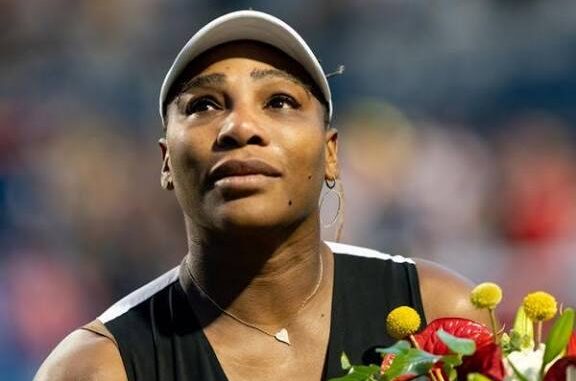
Serena Williams has recently spoken in depth about how the public dialogue surrounding Black women in athletics has shifted over the years, reflecting on both her own experiences and the cultural landscape that has evolved since she first entered professional tennis. Appearing as the cover star for Net-A-Porter’s digital magazine Porter, the 44-year-old former world number one discussed the strength, persistence, and self-assurance she was forced to develop while navigating a sport in which very few players looked like her.
Williams, winner of 23 Grand Slam singles titles during a professional career that spanned nearly three decades, described the environment she grew up competing in. She explained that being a young Black player in a predominantly white sport brought particular pressures and prejudices that she had to learn to block out. “When you come up in tennis as a Black girl, you understand early on that negativity will follow you,” she said. “I learned not to listen to the noise. People can have their opinions — that part is out of my control.”

Her rise through the ranks was far from effortless. Throughout her career, Williams faced harsh scrutiny, stereotypes, and overt racial bias. Critics frequently questioned her physique, demeanour, and playing style, drawing comparisons and comments she believes would not be directed at players entering the sport today. Despite these obstacles, her overpowering game, mental toughness, and incomparable consistency eventually redefined the expectations placed on female athletes, especially those of colour.
Many now recognise Williams as a transformative figure who helped reshape the landscape of tennis both on and off the court. Reflecting on how her impact has influenced the current generation, she noted that discussions about Black women in sport are no longer framed in the same way they were when she and her sister, Venus, burst onto the scene. “The way people talk about these young women now is completely different,” she explained. “No one is calling them the kinds of names I had to hear. People used to say we looked like men or make all kinds of comments. It was constant. But I’m grateful that the young girls coming up don’t have to face it to the same degree.”
Williams’ own career statistics underscore the breadth of her influence. Over her time on the WTA Tour, she contested 1,011 matches and faced opponents spanning nearly four decades in age, from players born in the mid-1960s to those born in the early 2000s. Her longevity and dominance cemented her as one of the most significant athletes of her generation.
Since stepping away from the sport after the 2022 US Open, Williams has reflected on what it means to leave behind something that defined her life for so long. She admitted that transitioning away from professional competition has been challenging, even though she tried to prepare herself for it. “When you’ve dedicated your life to performing at the highest level every single day, walking away isn’t easy,” she said. “I did everything I could to be ready for retirement, but there’s still an adjustment period.”
She added that this stage of life has become a journey toward rediscovering her own identity outside of motherhood and outside of tennis. “I’m trying to find clarity and confidence in the choices I’ve made. I want to remind myself — and other women — that you don’t have to exist solely for your children. I’m learning who I am again.”
Leave a Reply