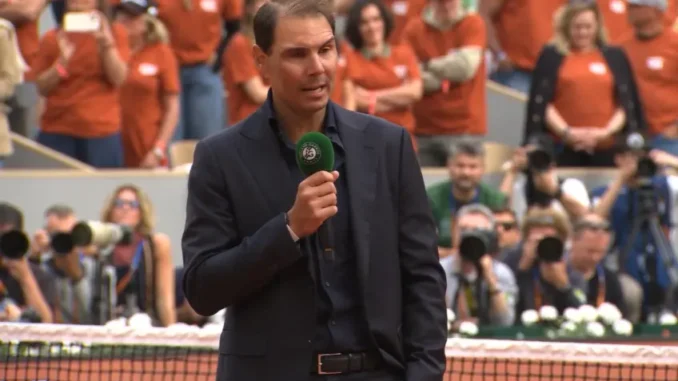
Rafael Nadal has spoken with striking sincerity about the journey that shaped not only his own legacy but an entire chapter of tennis history. Central to that story, of course, is his unparalleled connection with Roland Garros—a bond so extraordinary that it almost stands apart from the rest of the sport. When Nadal reflects on the run that brought him 14 titles in 19 appearances, he does so with the same humility that marked his career. Despite the dominance he displayed on the terre battue, he insists that nothing at the tournament was ever preordained or guaranteed.
According to Nadal, what the world witnessed in Paris for nearly twenty years was not the product of inevitability, but of timing, determination, and a constellation of small factors aligning again and again. The stretch of time between his debut triumph in 2005 and his emotional farewell ceremony in May of this year forms a narrative unlike anything tennis has seen before. Over those two decades, Nadal assembled a record on the Parisian clay that seems almost untouchable, one that cemented his reputation as the undisputed King of Clay.
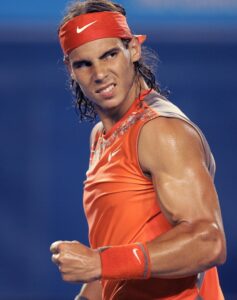
His résumé at Roland Garros includes 14 championships, only four defeats, and a single walkover—numbers that appear almost surreal when viewed in isolation. Throughout those years, he endured long setbacks, battled chronic injuries, faced razor-tight contests, and continually evolved his game to stay ahead of the competition on the court he often referred to as his second home. While Nadal acknowledges he possessed a natural advantage on clay, he repeatedly underscores that such superiority alone could never have produced the results he achieved. In his view, every win was the consequence of countless factors converging in his favor.
Imagining anyone approaching a 112–4 match record at a single Grand Slam event illustrates the magnitude of his achievement. His farewell this May—marked by tears, testimonials, and a prolonged standing ovation inside Court Philippe-Chatrier—served as a fitting closing chapter to a saga that stretched across generations of fans and competitors. For those who watched the tribute either in the stadium or from afar, the ceremony distilled the scope of Nadal’s impact in Paris. It was more than a routine acknowledgment of a great champion; it was a recognition of an athlete who shaped the identity of a tournament.
The ceremony highlighted the qualities that defined Nadal’s tenure in Paris: fierce competitiveness, modesty, and a level of consistency rarely witnessed in any sport, let alone on the most demanding clay court in the world. Two decades after first lifting the Coupe des Mousquetaires, Nadal now views Roland Garros as the central narrative of his career—a story crafted through passion, endurance, and a relationship with the Parisian surface that remains unmatched.
Reflecting on his time there, Nadal explained that what he experienced in Paris defies simple comparison. From his breakthrough victory in 2005 to his retirement this year, the path he walked became the defining record of his career. He admits that he may have been the strongest player on clay during those years, but emphasizes that dominance alone cannot account for his results. Countless elements—physical, mental, tactical, and even circumstantial—had to fall perfectly into place, and through some combination of effort and fortune, they consistently did.
“What I lived in Paris is hard to compare with anything else,” Nadal said. “That story began in 2005 and continued all the way to my retirement this year. Without planning it, it became the record I value the most. When I think back on it, yes, maybe I was better than others on that surface, but there are so many things that must come together for that to happen—and they did.”
Leave a Reply